
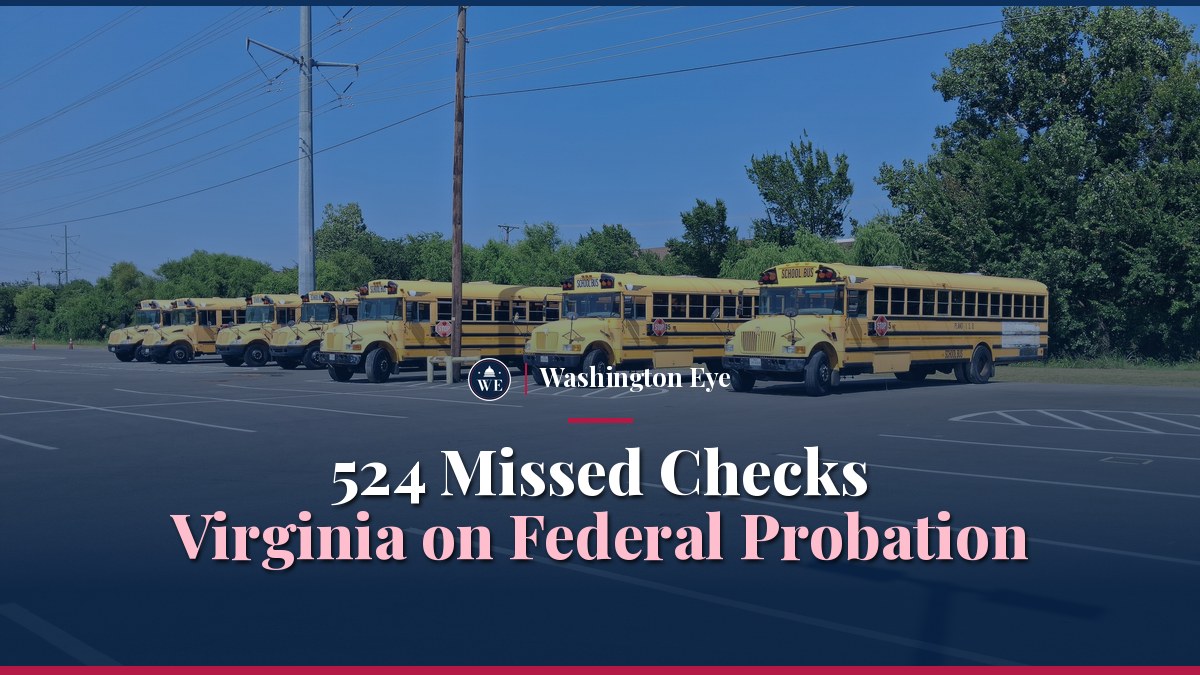
For four school days before Thanksgiving, the yellow buses of Albemarle County, Virginia, stayed parked. All 29 schools in the division, which serves more than 14,000 students around Charlottesville, closed on November 19 after the district admitted that more than 500 people hired over three years had never been run through a state registry of child abuse and neglect findings. On Monday, the federal government turned a local scandal into a statewide one.
The US Department of Education announced what it called "unprecedented enforcement action." It placed the Virginia Department of Education on high-risk status, directed the state to withhold federal money from Albemarle County Public Schools, moved to bar at least five former school officials from federally funded work, and opened a civil rights investigation into how the district handled reports of sexual misconduct. Education Secretary Linda McMahon called the closure "an unfathomable failure of the school division and state leaders."
By the same evening, the district reported that 519 of the 524 missing checks had come back clear, with the last five held up by clerical errors. So what exactly went wrong, why is Washington punishing the whole state, and what happens to the children who depend on the money? Here is what we know.
What did Albemarle actually miss?
Virginia requires two separate screenings for new school employees. The first is a fingerprint-based criminal history check through the Virginia State Police. The second is a search of the Child Protective Services Central Registry, kept by the Virginia Department of Social Services, which records founded complaints of child abuse or neglect. A person can have a founded complaint in that registry without ever having been convicted of a crime, which is why the law demands both.
Albemarle ran the criminal checks. It did not consistently send new hires to the registry. In a letter to families on November 18, acting superintendent Chandra Hayes wrote that "over the past three years, there were more than 500 people hired by the division who passed their criminal background checks, but their information was never submitted for the Social Services registry review." The staff responsible for those submissions, she said, "did not consistently follow established processes."
A district spokesman, Jason Grant, later described the cause in blunter terms to a local television station. "We had the problem in the system. We had a single point of failure," he said. Under state rules, new staff can start work once they clear the criminal check, sign a form declaring they have no abuse findings and have the registry request submitted. In hundreds of cases, that last step simply never happened.
Was anyone dangerous actually working in the schools?
On the narrow question of the missing registry checks, the answer so far is no. The district said every application processed by the state has come back clear: 512 of 512 by November 22 and 519 by Monday, with five forms returned for problems such as a missing signature or an unreadable name. Hayes also said the district checked whether anyone currently under investigation or facing charges related to abuse, neglect or failure to report was among the unscreened hires, and that none were. The local teachers' union said the same.
But the closure did not happen in a vacuum, and that is why the federal response is so fierce. Albemarle has been in turmoil since the start of the school year. A social and emotional learning coach at an elementary school was indicted on charges of sexually assaulting students; the federal department says he faces twenty counts of sexual battery involving at least seven children. The federal release also says a teacher pleaded guilty to possessing child sexual abuse material. In October, the principal of the elementary school and two other district administrators were arrested and charged with failing to report suspected abuse. The former superintendent, Matt Haas, and that principal both resigned after criticism of how the case was handled.
In other words, the registry lapse was discovered by a new leadership team already digging through the wreckage of a real abuse scandal. Those are separate failures, but parents are not wrong to see them as part of one pattern of a system that did not take its own safeguards seriously.
What exactly is Washington doing?
The Education Department announced four steps. First, it designated the Virginia Department of Education as a high-risk grantee "for its apparent failure to enforce state and federal laws." Within 30 days the state must file a corrective action plan, and the conditions for lifting the status include auditing every school division in Virginia to confirm that hiring procedures, including background checks, are being followed.
Second, it directed the state to withhold federal funds that flow through Richmond to Albemarle until the district shows it has fixed the failures. Third, it began moves to suspend and propose permanent debarment of at least five former school officials who have been charged with crimes or who, in the department's words, "egregiously neglected their professional responsibilities." A debarred person cannot do business with any federally funded entity, which in practice includes school districts. Fourth, its Office for Civil Rights opened a directed Title IX investigation into whether Albemarle mishandled reports of sexual harassment and assault.
The legal hooks are the Elementary and Secondary Education Act, which requires states to assure Washington that teachers meet state licensing requirements, including background checks, and which bars schools from helping a suspected abuser find a job elsewhere, and Title IX, which requires schools to respond promptly to known sexual harassment.
Why put the whole state on high-risk status?
This is the most striking part of the announcement, and the most debatable. The federal argument is that the state is the grantee. Under federal education law, it is Virginia that certifies districts are following the rules, so a district that skips a legally required check for three years is, in Washington's view, evidence that the state was not watching.
Education lawyers note how unusual it is to lead with this tool. Julia Martin, a policy director at an education law firm that represents states and districts, called high-risk status a "fairly extraordinary condition" and said it is "unusual to use as a first step." In practical terms, the designation makes the state less competitive for discretionary federal grants and can force it to spend money first and seek reimbursement later rather than drawing funds directly. To escape it, Virginia has to show it has fixed both the immediate problem and the process that allowed it.
There is also an obvious political backdrop. Virginia is now governed by a Democrat, Abigail Spanberger, and the federal release, issued by a Republican administration, pointedly blames "state leaders" alongside the district. Yet the governor has hardly defended Albemarle. On November 18 she said the district's prior leadership "failed the children and families they serve" and "failed to follow the law," and her administration ordered an outside investigator. The state superintendent, Jenna Conway, said the self-disclosure was appreciated but that complete background checks are "a school division's moral responsibility." The state says it had already required a third-party review and reissued compliance guidance to every district before Washington stepped in.
Who pays if the money is withheld?
This is the uncomfortable question at the centre of the federal move. Hayes told families that federal funds "primarily support services for students with disabilities and students from low-income households, and protecting those services will be our priority." Those are the students least able to absorb a cut, and none of them had anything to do with a missed form.
Supporters of the federal approach would answer that funding leverage is the only language a negligent bureaucracy reliably hears, and that the department has framed the hold as temporary, lasting only until the district demonstrates it has corrected the failures. Critics would answer that punishing the beneficiaries of federal aid for the sins of administrators who have already resigned or been charged is accountability aimed at the wrong target. Both points can be true at once. What matters now is how long the hold lasts and whether the state can shield special education and Title I services while the paperwork is sorted out.
Is this part of something bigger?
Yes. Over the summer the Education Department launched an initiative against what it calls "passing the trash," the practice of letting staff accused of sexual misconduct quietly move on to another school rather than facing consequences. It has since opened related investigations into 32 school districts nationwide, the Albemarle inquiry among them. McMahon's statement framed Monday's action as part of that crackdown: "Parents should never have to question whether their child's school is aiding and abetting child predators."
What sets Albemarle apart is that the department has gone beyond the district to sanction the state agency itself, a step it describes as unprecedented, and that makes it a test. If Virginia's corrective plan and statewide audit satisfy Washington quickly, the episode may become a template other states study to avoid. If the two governments end up fighting over authority and money, it could become a template of a different kind, one in which federal school safety enforcement and partisan conflict become hard to tell apart.
What happens next?
Three dates matter. The district expects to reopen on Monday, November 30, once the last five registry checks clear; it says no one will work with students until the state confirms their screening, and that from now on no new hire will start until the registry result is back, even if that slows hiring. Within 30 days of Monday's announcement, Virginia must deliver its corrective action plan to the federal department. And the criminal cases against the former Albemarle staff continue on their own track in the courts.
The state education department says it is working with the district, the governor's office and the state attorney general to decide how to respond to the federal actions and what they mean for students. The district says it will cooperate fully, including with the civil rights review.
Our read
Strip away the politics and the core lesson is almost boring, which is exactly why it matters. A safeguard designed to catch people the criminal justice system misses depended on one person or one office remembering to send a form, and nobody checked whether it was sent. The fix the district has now adopted, that no one starts until the registry result is back, is the rule many parents assumed was already in place.
Washington is right that this was a serious failure and right to demand a statewide audit. It has a harder case to make that the best way to protect Albemarle's children is to cut money meant for its most vulnerable students. The test of Monday's action will not be how tough it sounded. It will be whether every Virginia district can prove, within weeks, that the people around children have been checked twice, and whether the students who rely on federal aid come through the process unharmed.